IRS Form 1099-DIV – Fill, Sign and Download | Dividend Distributions
Enkriptuar dhe fshirë automatikisht pas 15 ditësh
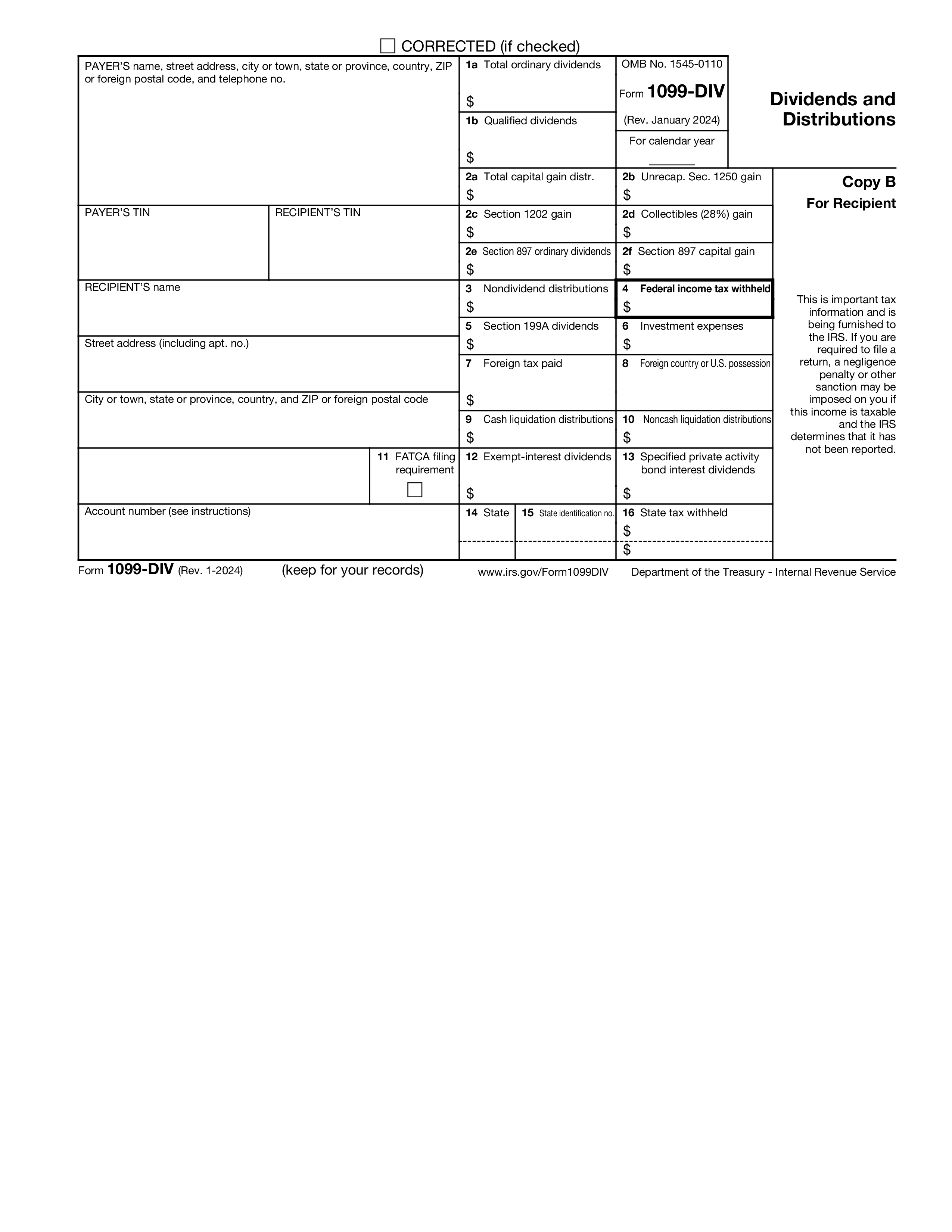
Form 1099-DIV is the information return issued by corporations, mutual funds, REITs, brokers, and other payers to report dividends, capital gain distributions, and certain other distributions paid to investors during the tax year. The form distinguishes ordinary dividends from qualified dividends (which are taxed at the lower long-term capital gains rates), and separates capital gain distributions, nondividend distributions (return of capital), and Section 199A dividends from real estate investment trusts.
Payers — domestic corporations paying dividends, mutual funds and ETFs making distributions, REITs, brokerage firms holding dividend-paying securities in customer accounts — issue Form 1099-DIV. Recipients are individuals, trusts, estates, and other taxpayers who received $10 or more of dividends from a payer during the year. Recipients of $600 or more in liquidation distributions also receive a 1099-DIV. Foreign payments and exempt-interest dividends from municipal bond funds are reported here as well.
Box 1a: total ordinary dividends. Box 1b: qualified dividends (the portion of 1a that meets the holding period and other requirements for long-term capital gains rates). Box 2a: total capital gain distributions. Box 2b–2d: breakouts for unrecaptured Section 1250 gain, Section 1202 gain, and collectibles gain. Box 3: nondividend distributions (return of capital that reduces basis rather than producing taxable income). Box 4: federal income tax withheld. Box 5: Section 199A dividends (qualified REIT dividends). Box 7: foreign tax paid. Box 12: exempt-interest dividends from a municipal bond fund.
Payers must furnish Copy B to the recipient by January 31. Copy A is filed with the IRS by February 28 on paper or March 31 electronically. Filers with 10 or more information returns of any type must e-file. Recipients use the 1099-DIV amounts to complete Form 1040: ordinary dividends on the dividend line, qualified dividends on the qualified dividend line (which routes the tax calculation through the lower capital gains rate worksheet), capital gain distributions on Schedule D (or directly on 1040 in simple cases), and nondividend distributions to adjust the cost basis of the holding.
1. Plotësoni formularin
Plotësoni detajet dhe informacionin tuaj, shtoni datën dhe personalizoni sipas nevojës
2. Shto nënshkrimin tënd
Shtoni nënshkrim ligjërisht të detyrueshëm duke vizatuar, ngarkuar ose duke shtypur
3. Shkarkoni ose ndani
Formulari juaj është gati, shkarkoni, ndani lidhjen ose dërgoni përmes email-it menjëherë