What is a Horse Bill of Sale?
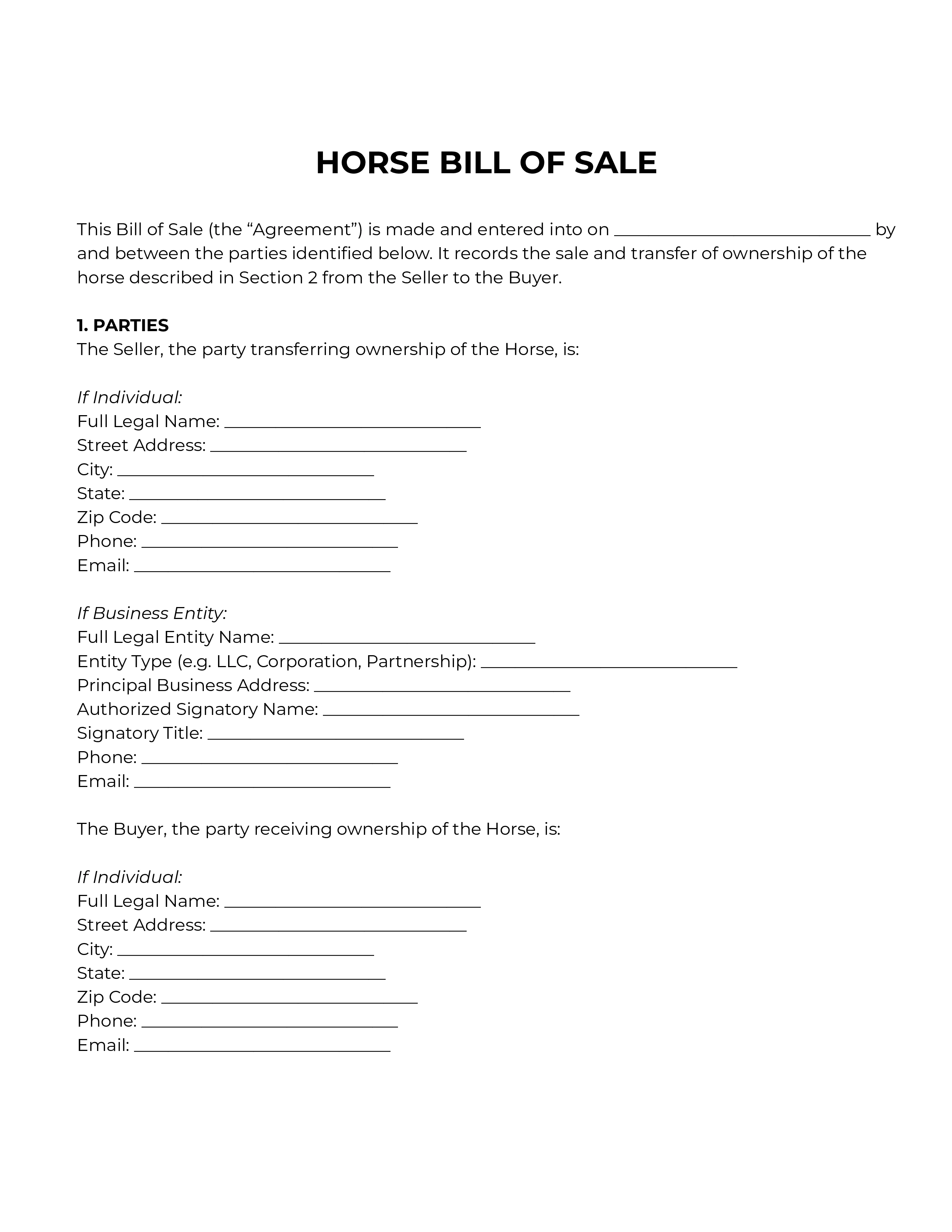
A Horse Bill of Sale is a document that records the direct sale of a horse and the transfer of ownership from the Seller to the Buyer. It identifies the parties, describes the horse in enough detail to distinguish it from any other animal (breed, sex, color, age, markings, microchip, registration, and parentage where known), sets out the purchase price and how it's being paid, and states the date ownership and risk of loss pass to the Buyer. It also covers what the Seller is confirming about the horse — ownership, any liens or unpaid board and training fees, and any known health conditions, injuries, or behavioral issues — and the "as-is" basis on which the horse is being sold. The template is designed for direct seller-to-buyer transactions and does not address the role of trainers, brokers, bloodstock agents, or other intermediaries.
When People Use It?
- A direct sale of a horse between a Seller and a Buyer, without a trainer, broker, bloodstock agent, or other intermediary handling the transaction
- Sales between breeders, stables, or private owners and a new owner, where the parties are dealing directly with each other
- Transfers of show, competition, breeding, or pleasure horses where breed-association paperwork also needs to be updated
- Sales of horses that are registered, microchipped, or have known parentage, where identification details need to be recorded
- Sales of horses where the Buyer has had (or chose not to have) a pre-purchase veterinary examination
- Situations where the Buyer or Seller wants a written record for tax, insurance, or future resale purposes
Why People Use It?
- Creates a clear paper trail of who owned the horse on which date, which is often needed for breed-registry transfers, insurance, and resale
- Sets the moment ownership and risk of loss pass from the Seller to the Buyer, so it's clear who is responsible for care, boarding, veterinary expenses, and insurance from that date forward
- Records the Seller's confirmations about ownership, liens, and known issues, so both parties have a written reference if a dispute arises later
- Documents the "as-is" basis of the sale and the warranty disclaimer, so the Buyer's and Seller's positions on the horse's condition are set out in writing
- Captures the horse's identifying details (microchip, registration, markings, sire, dam) in one place, alongside the sale terms
What the Template Gives You?
- Seller and Buyer sections that adapt to whether each party is an individual or a business entity
- A horse description block covering registered name, breed, sex, color, date of birth or approximate age, height, markings, microchip, breed-association registration, and sire and dam
- Purchase price, payment method, and payment status fields, with a free-text branch for payment arrangements where the balance is due later
- A transfer-of-ownership date that governs both title and risk of loss
- Fixed clauses covering breeding rights, the Buyer's opportunity to obtain a pre-purchase veterinary examination, the "as-is" sale and warranty disclaimer, the Seller's representations on ownership and known issues, and the handover of registration certificates.