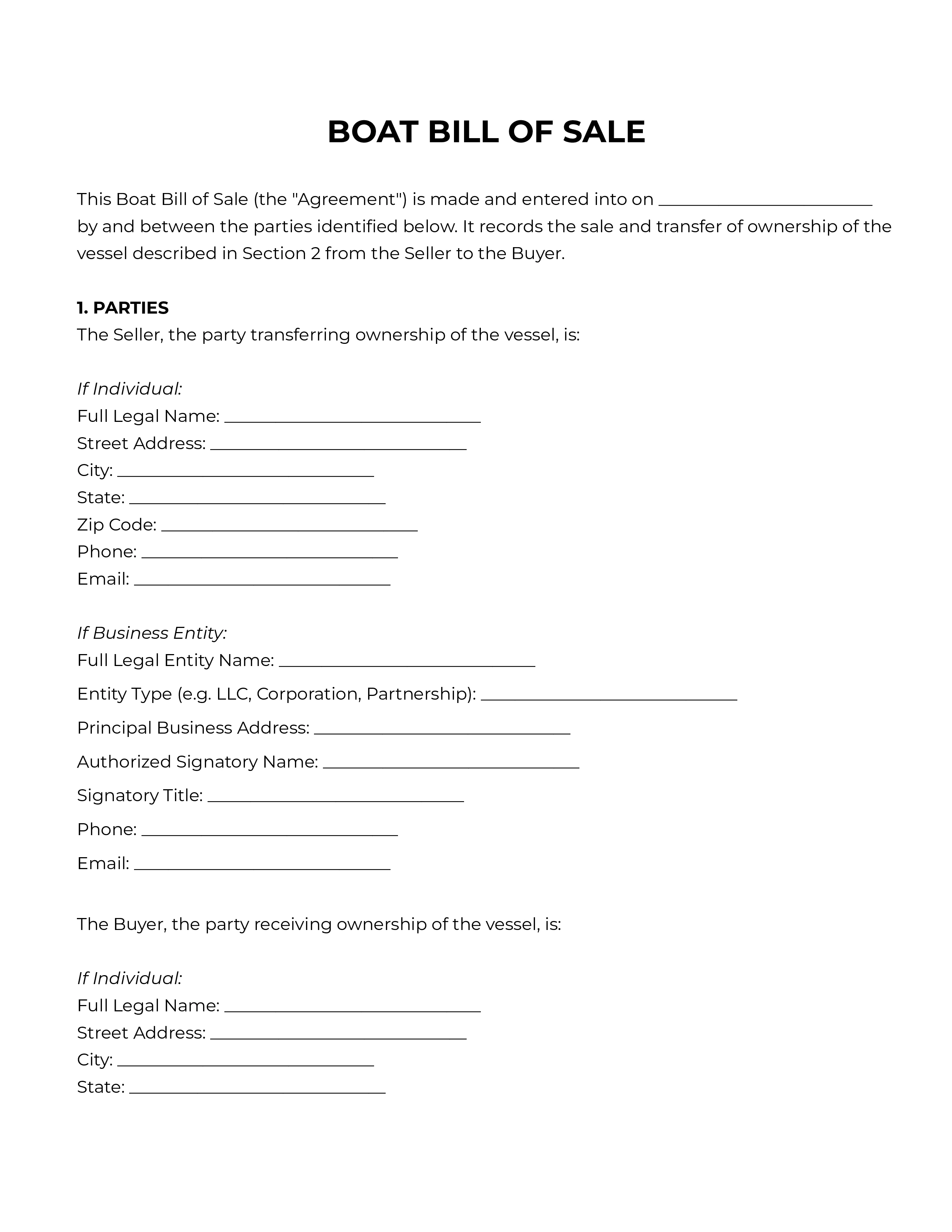
What is a Boat Bill of Sale?
A boat bill of sale is a document that records the sale of a boat from one party to another. It identifies the seller and buyer, describes the boat being sold, sets out the purchase price and payment terms, and confirms the date of ownership transfers. Depending on what is included in the sale, it can also cover a motor, trailer, and accessories. The document is signed by both parties and, in some states, witnessed or notarized.
When People Use It?
- Selling or buying a boat in a private transaction between individuals
- Selling or buying a boat through or from a business
- Transferring a boat that comes with a motor, trailer, or other accessories
- Documenting a sale that involves a deposit, balance due later, or a payment plan
- Registering or titling a boat with a state agency that requires proof of sale
- Closing out a loan or lien against a boat as part of the sale
Why People Use It?
- To create a clear written record of who sold the boat, who bought it, and on what terms
- To document the agreed purchase price and payment arrangements
- To confirm the date ownership passes from seller to buyer
- To record the condition the boat is being sold in, including any "as-is" terms or limited warranties
- To disclose and address any existing liens, loans, or third-party claims against the boat
- To support state registration, titling, and tax requirements that may call for proof of the sale
- To reduce the risk of later disputes about what was sold, what was included, or what was paid
What the Template Gives You?
- A guided question flow that builds the bill of sale step by step
- Fields for both individual and business parties, with signatory details for entities
- A vessel description section covering make, model, year, length, HIN, and other identifiers
- Optional sections for motor and trailer details that appear only if included in the sale
- A flexible payment section covering common methods and payment structures (paid in full, deposit with balance due, or payment plan)
- "As-is" and limited warranty options for recording the condition of the boat
- A lien and claims section for disclosing or confirming clear title
- Electronic signature fields, with the option to leave signing for later