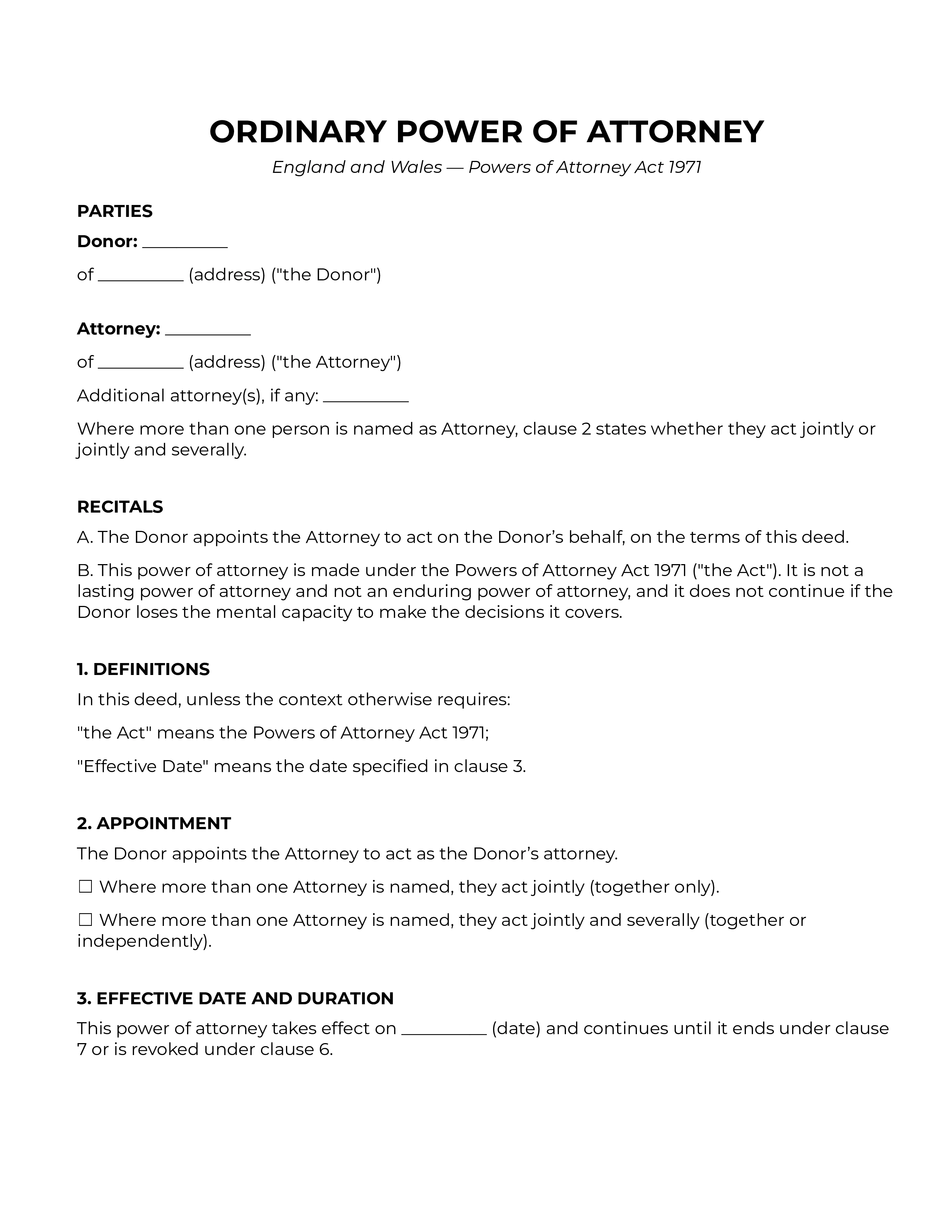
An ordinary power of attorney is a deed made under the Powers of Attorney Act 1971 by which a donor appoints an attorney to act on their behalf. It differs from a lasting power of attorney or an enduring power of attorney because it does not continue if the donor loses the mental capacity to make the decisions it covers - it ends automatically at that point, or on the donor’s death.
The deed can give the attorney general authority to do anything the donor could lawfully do by an attorney, or authority limited to specific matters. It must be executed as a deed, which means it is not validly made without a witness who attests the donor’s signature.
Choose your legal form
Browse the library or search to find the exact template you need
Answer simple questions
The guided editor turns your answers into a finished legal form
Sign your document
E-sign, then download, print, or share your legal document instantly
1.Choose your legal form
Browse the library or search to find the exact template you need
2.Answer simple questions
The guided editor turns your answers into a finished legal form
3.Sign your document
E-sign, then download, print, or share your legal document instantly