Trailer Bill of Sale – Fill, Sign and Download | Ownership Transfer
Krypterad och automatisk raderad efter 15 dagar
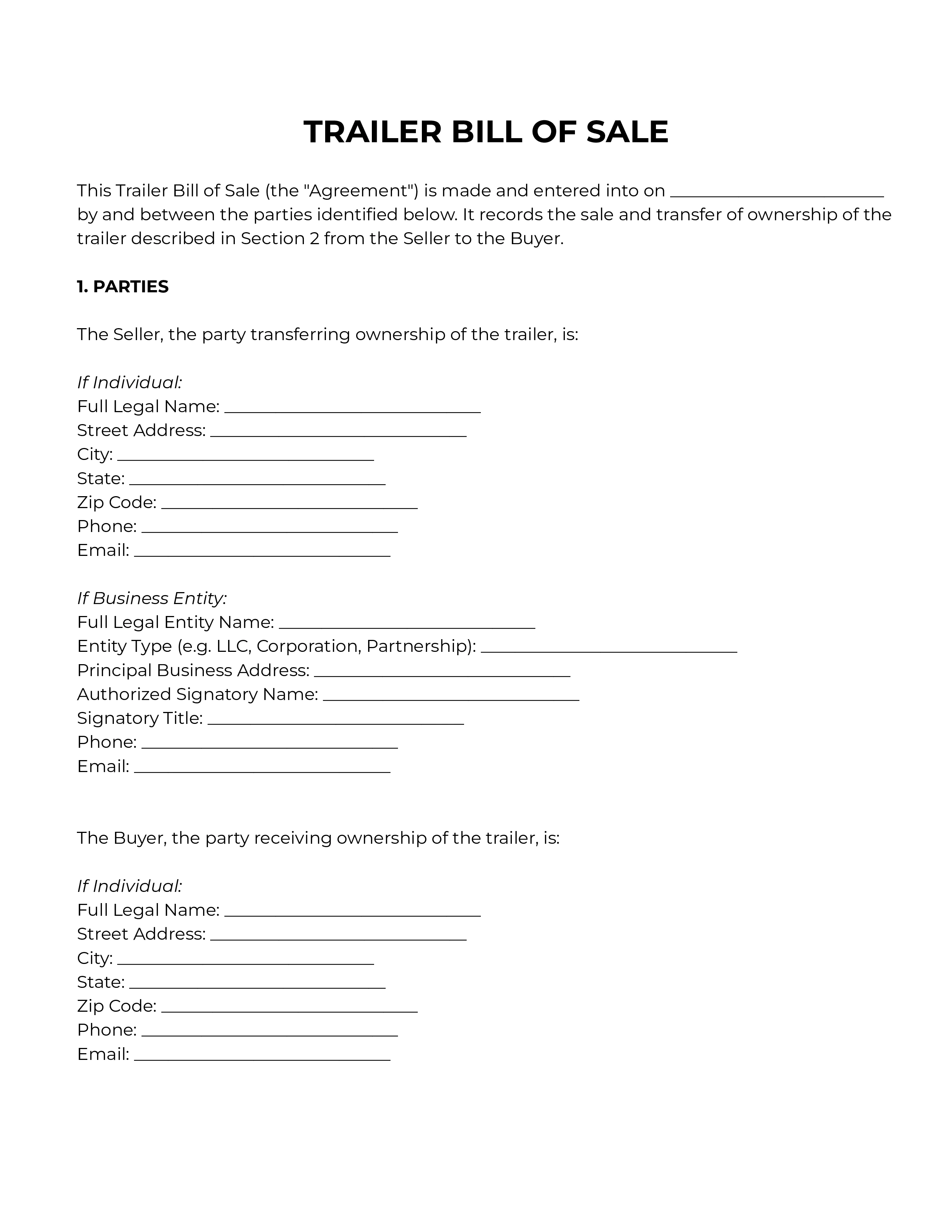
A Trailer Bill of Sale is a legal document that records the sale of a trailer — utility, cargo, boat, horse, travel, or commercial — and transfers ownership from the seller to the buyer. It serves as proof of the transaction for both parties and is required by most states when titling, registering, or insuring the trailer in the buyer's name.
A complete Trailer Bill of Sale captures the full legal names and addresses of buyer and seller, the trailer's identifying details (make, model, year, type, length, weight, color, VIN or serial number), the agreed sale price (or "gift" if no money changes hands), the date of sale, payment method, and the signatures of both parties. Some states require a notarized signature — check your state's specific requirements before signing.
For the buyer, the Bill of Sale is the document that lets you title, register, and insure the trailer. For the seller, it's the record that releases you from future liability tied to the trailer — accidents, citations, or unpaid registration fees that occur after the sale date are no longer your responsibility. Both parties should keep a signed copy with their records.
Trailer titling and registration rules vary by state and by trailer weight and type. Most states require a title for trailers above a certain unladen weight (often 1,500–3,000 pounds), and lighter utility trailers may need registration only. Commercial trailers and travel trailers often have additional requirements. States typically collect sales tax at the time of registration based on the price listed on the Bill of Sale. Check your state's Department of Motor Vehicles for the exact rules.
1. Fyll i formuläret
Fyll i dina uppgifter och information, lägg till datum och anpassa efter behov
2. Lägg till din signatur
Lägg till juridiskt bindande signatur genom att rita, ladda upp eller skriva
3. Ladda ner eller dela
Ditt formulär är klart, ladda ner, dela länk eller skicka via e-post omedelbart